



Aluminum Zipline Pulley for a Lightweight Setup: How to Choose
Lightweight does not mean compromising on fit or capacity. An aluminum zipline pulley for a lightweight setup should match the line, attachment hardware, and expected load, with a rated capacity suited to the complete system. Choosing by material or low weight alone can leave critical compatibility questions unanswered.
A lighter pulley can make sense when you want to reduce equipment weight, but the details still matter. This guide explains how to assess load rating, line compatibility, pulley design, and connection points so you can narrow your options with confidence. Learn which factors affect your choice, what to compare in product specifications, and why the pulley must work as part of a properly matched setup. Evaluate the requirements methodically so the equipment can do its job.
Key Takeaways
- Match the pulley’s rated capacity to the complete setup, not just the rider’s weight.
- Compare the pulley’s compatibility with the line and connection hardware before choosing by weight or material alone.
- Use dimensions and design details to assess whether the pulley fits the intended rigging arrangement.
- Consider zipline pulleys and related safety gear from Fusion Climb when selecting components for your setup.
Aluminum zipline pulley for lightweight setup
Choose an aluminum zipline pulley for a lightweight setup based on fit and rated capacity, not material alone. Aluminum alloy can reduce component weight, but the pulley still needs to match the line, attachment hardware, and intended use. Start with those requirements, then compare dimensions and capacity in the product specifications.
Start with fit
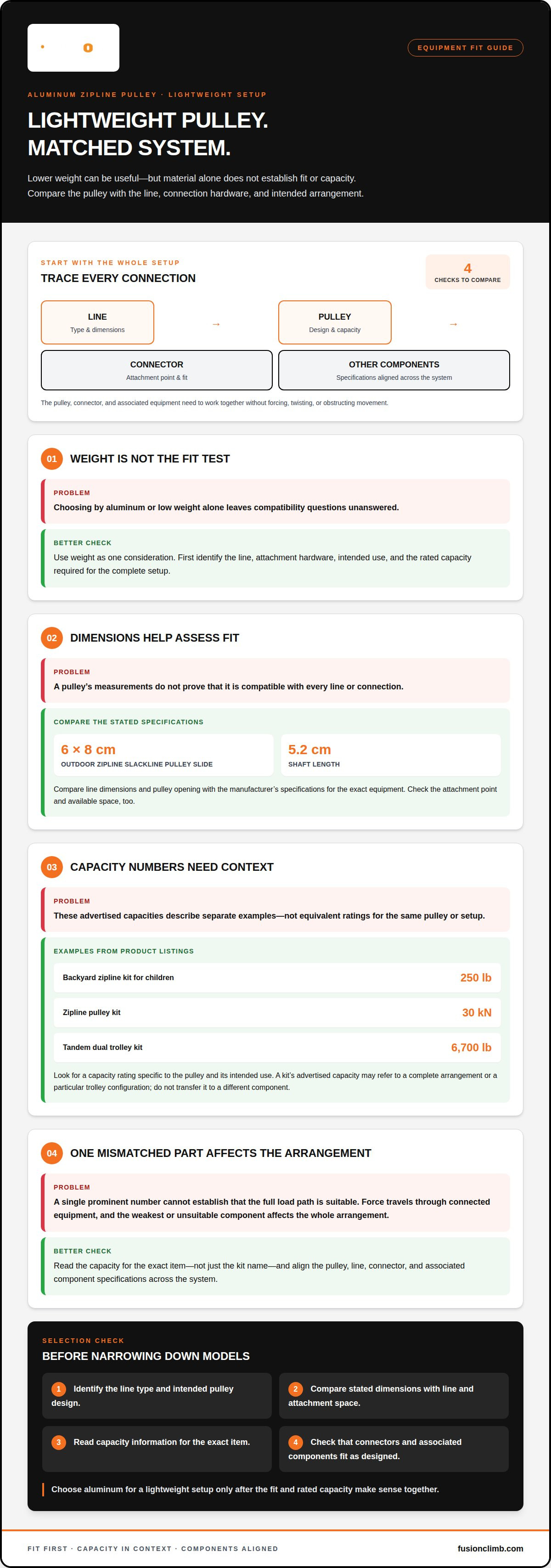
Check how the pulley is designed to run on the line. A pulley built for a slackline, for example, may have dimensions that differ from a trolley intended for another line arrangement. The Outdoor Zipline Slackline Pulley is described with a 6 x 8 cm slide and a 5.2 cm shaft length. Those measurements help you judge physical fit, but they don’t establish compatibility with every line or connection.
Compare the line dimensions and pulley opening with the manufacturer’s specifications for the exact equipment. Consider the attachment point, too: the pulley, connector, and other components must work together without forcing, twisting, or obstructing movement. A pulley’s dimensions alone do not establish that it suits the complete system. Record the line type, intended attachment, and required dimensions before narrowing down models.
Read capacity in context
Capacity figures matter, but they only help when you understand what equipment they describe. A backyard zipline kit for children is listed with a 250 lb capacity. Another zipline pulley kit is advertised with a 30 kN capacity, while a tandem dual trolley kit is advertised with a 6,700 lb capacity. These are separate examples, not ratings to compare as though they describe the same pulley or setup.
Look for a capacity rating specific to the pulley and its intended use. A kit’s advertised capacity may refer to a complete arrangement or a particular trolley configuration, so don’t apply that number to a different component. The load path matters, too: force travels through connected equipment, so the weakest or unsuitable component affects the whole arrangement. Select components with specifications that align across the system, rather than relying on a single prominent number.
Balance weight and function
Aluminum alloy can help reduce equipment weight, but a light pulley is useful only if it suits the intended setup. Compare its construction and dimensions with the line and connectors it must accommodate. A compact design isn’t automatically the best fit, and a higher capacity listed for a kit doesn’t automatically make its pulley suitable for another arrangement.
Use a simple comparison process:
- Identify the line type and the pulley design intended for it.
- Compare the pulley’s stated dimensions with the available line and attachment space.
- Read the capacity information for the exact item, not just the kit name.
- Check that connectors and associated components fit the pulley as designed.
For example, the 6 x 8 cm slide and 5.2 cm shaft measurements offer concrete comparison points for the Outdoor Zipline Slackline Pulley. They don’t replace the equipment’s own fit and capacity requirements.
Keep the setup matched
A pulley choice affects more than the weight carried in a pack. It also determines whether the moving component suits the line and connection arrangement. Before settling on a model, map the complete setup from line to pulley to connector, and compare every stated requirement. If a kit’s 250 lb rating or a trolley’s 6,700 lb rating appears relevant, first establish which item that rating describes. A capacity figure without that context can lead to a mismatched selection.
Choose aluminum for a lightweight setup only after the fit and rated capacity make sense together. Use the 30 kN kit example, the 250 lb backyard kit, and the 6,700 lb tandem trolley as reminders to read specifications precisely, not as universal targets. Matching the pulley to its actual line and intended arrangement is the practical starting point for a dependable selection.
Fusion Climb: Zipline Pulleys
Fusion Climb offers zipline pulleys to match specific lines and setups. Once you’ve identified the required fit and capacity, compare pulley specifications with the other components in your system. Choose a pulley that works with the intended line and attachment arrangement, not just by material or weight.
Fusion Climb also offers full body harnesses, Superman style harnesses, and lanyards and tethers. These products serve different roles, so choose each according to its function and compatibility with the system. Keep the pulley and connected equipment aligned with the intended use.
Contact Fusion Climb to discuss zipline pulley options for your setup.
Set Your Setup in Motion
Choosing an aluminum zipline pulley for a lightweight setup is one part of building a system that works as a whole. Bring your intended line and equipment requirements together, then use them to guide your pulley selection. A clear plan helps keep component choices practical and suited to the way you’ll use the setup.
Fusion Climb offers zipline pulleys, full body harnesses, and Superman style harnesses. These products serve different functions, so focus on the role each item needs to fill rather than treating one piece of gear as a substitute for another. Keep compatibility and intended use at the center of your decision.
Contact Fusion Climb for pulley help as you consider the right components for your setup. Take the next step with a deliberate plan and equipment choices that fit your intended use.