



Commercial Zipline Carabiners: Ratings and Locking Options
Commercial zipline carabiners appear in listings with ratings of 12 kN (2697 lb) and 25 KN. Those figures describe specific hardware, not a universal rating for every zipline setup. Locking carabiners are recommended for zipline applications, and a screw closure helps prevent accidental gate opening if the carabiner twists.
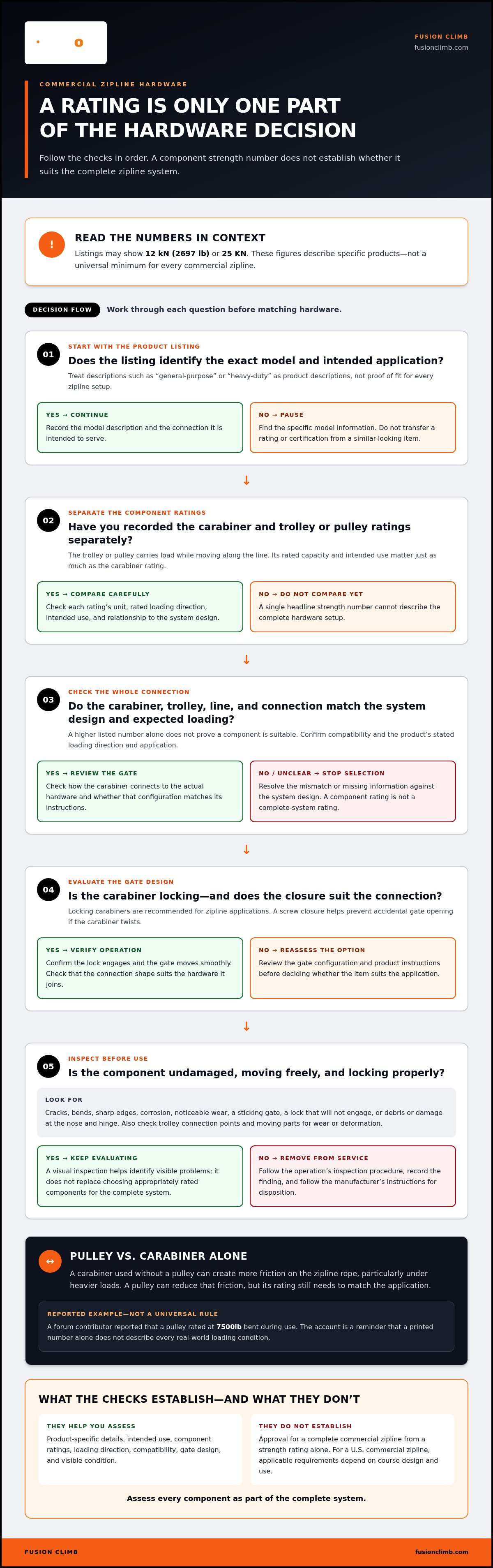
A higher number alone doesn’t settle the choice. Carabiner and trolley ratings, how the components connect, and gate design all matter when selecting hardware for a commercial system. A carabiner used without a pulley can also create more friction on the line, particularly under heavier loads.
This guide explains how to read carabiner and trolley ratings, compare locking options, and assess gate designs for your application. It also explains why one component’s rating can’t stand in for the complete setup’s rating, and what to consider when matching hardware for reliable movement along the line.
Key Takeaways
- Learn why a component’s strength rating alone doesn’t establish whether it suits the complete zipline system.
- See what details in product listings help distinguish carabiners and trolley hardware for different applications.
- Compare locking mechanisms and gate designs to understand how they affect connection security in use.
- Identify the factors that matter when evaluating whether a carabiner is appropriate for commercial zipline use.
- Use a practical framework to match hardware choices to the line, load, and intended setup.
Carabiner and trolley load ratings
For a U.S. commercial zipline, a strength rating alone doesn’t establish approval. Applicable requirements depend on the course design and use, so assess every component as part of the complete system. A carabiner’s marked strength is one factor, not a substitute for evaluating how the carabiner, trolley, line, and connections work together.
Listings show different ratings for different carabiners. One listed strength is 12 kN (2697 lb); another heavy-duty listing gives 25 KN. These figures describe specific products, not a universal minimum for every commercial zipline. Don’t compare the numbers without checking what the listing rates, how the equipment is intended to be loaded, and whether its connection matches the system design. A higher figure by itself doesn’t prove that a component suits a particular application.
Trolley ratings matter just as much. A pulley or trolley carries load while moving along the line, so its rated capacity and intended use must fit the setup. Carabiners used alone can create more friction on a zipline rope under heavy load than a pulley. A pulley can reduce that friction, but its rating still needs to match the application. A forum contributor reported that a pulley rated at 7500lb pounds bent during use. Treat that account as a reminder that a printed number alone doesn’t describe every real-world loading condition.
Use a component-by-component comparison before choosing hardware:
- Record the carabiner rating and the trolley or pulley rating separately.
- Compare each rating with the system design and the intended connection.
- Check whether the carabiner, trolley, and line are compatible under expected loading.
- Review product instructions for the rated loading direction and intended application.
Inspection is another essential step. Before use, examine the body for cracks, bends, sharp edges, corrosion, or noticeable wear. Open and close the gate to check that it moves smoothly and the locking mechanism engages. Inspect the nose and hinge area for debris or damage that could prevent closure. Also check the trolley’s connection points and moving parts for wear or deformation.
If an inspection reveals damage, deformation, a sticking gate, or a lock that won’t engage, remove the component from service under the operation’s inspection procedure. Record the finding and follow the manufacturer’s instructions for disposition. Consistent inspections help teams identify visible problems, but they don’t replace selecting appropriately rated components for the complete zipline system.
A forum contributor notes that carabiners alone can be harder on zipline rope under a heavy load than a pulley, so the choice affects the rope as well as the hardware.
Carabiner product listings
A product listing is a first screening tool, not a complete system assessment. Review each specification as a separate data point. When comparing commercial zipline carabiners, consider stated strength, gate configuration, locking method, and intended use. A listing that highlights only a strength rating leaves important selection details unanswered.
Start with the product’s stated application. A listing may describe a carabiner as general-purpose, heavy-duty, or suitable for a particular connection. Treat these as descriptions, not proof that it fits every zipline setup. Match the stated use to the connection in your design, then review the detailed product information. For example, a carabiner connecting a rider’s attachment to a trolley serves a different interface from one joining hardware elsewhere in the system.
Next, separate certification language from strength figures. A product page may describe a heavy-duty carabiner as UIAA-certified and show a 25 KN rating. That information belongs to the specific item and its stated configuration. It doesn’t establish that every carabiner on the page has the same certification or rating. Check the individual listing, rather than carrying a specification across similar-looking products.
- Read the exact model description and intended application.
- Find the rating and its unit on that product’s own listing.
- Note whether the listing identifies a locking gate or another gate design.
- Compare the carabiner’s connection shape with the hardware it must join.
- Review the manufacturer’s instructions for use and inspection.
Look closely at images, but don’t select by appearance alone. A photograph can help you identify the gate, nose, and body shape. Written specifications explain the listed use and relevant limitations. If a listing shows several configurations, confirm that the selected one matches its description. Similar shapes don’t make different models interchangeable.
For example, place two candidate listings side by side and compare their intended applications first. Then compare rating units, locking details, and connection geometry. A higher listed strength won’t resolve a mismatch between the carabiner and trolley connection. Likewise, a locking mechanism won’t make hardware suitable for an application outside its stated use. Keep product information with equipment records so you can identify the selected model during inspection.
Use a consistent review process across every purchase. Record the model identifier, listing specifications, and the system connection it serves. Then compare the actual delivered item with that record before placing it into service. A useful carabiner product listing helps you assess those details alongside other zipline hardware, rather than relying on a single headline specification.
Locking carabiners for zipline applications
Locking carabiners are recommended for zipline applications. A locking sleeve helps prevent the gate from opening unintentionally, while the carabiner’s shape and connection determine how it sits in the system. Evaluate the complete connection, not just whether it has a lock. A lock can’t correct a poor fit, side loading, or incompatible hardware.
Steel and aluminum carabiners differ in material, but material alone doesn’t determine suitability for commercial use. Compare each product’s stated rating, intended application, gate design, and instructions. Consider the connected hardware and the conditions specified for use. Steel and aluminum models that look similar aren’t automatically interchangeable. Select based on specifications and system compatibility, not material name alone.
Operate the lock as designed. On a screw-closure model, close the gate and tighten the sleeve after making the connection. Confirm the gate returns fully and the sleeve reaches its locked position. If the carabiner rotates during movement, inspect its orientation and contact points. A screw closure can help prevent accidental gate opening if the carabiner twists, but it still needs to be properly closed and inspected.
Build an inspection process around the manufacturer’s instructions and written operating procedures. Inspectors need to understand the procedure, recognize damage, and know how to record findings. Keep records linked to each identifiable carabiner, including its model, inspection findings, and any removal from service. These are practical controls, not a claim that one documentation format satisfies every jurisdiction.
Requirements for a U.S. operation depend on the rules that apply to its location and activity. Include the course’s operating context and equipment instructions in your review. A product listing alone doesn’t establish regulatory approval. Document the requirements used for the operation so staff can apply the same criteria consistently.
Set inspection timing according to manufacturer instructions, frequency of use, and exposure to conditions that can cause wear. Include a visual and functional check before use, then schedule documented inspections suited to the operation. Remove a carabiner from service if its gate sticks, its lock fails to engage, or its body shows damage or deformation. Follow the manufacturer’s guidance for disposition.
- Match the material and model to the stated application.
- Close and test the lock after every connection.
- Record inspection results against identifiable equipment.
- Base inspection timing on use, exposure, and manufacturer guidance.
Preventing accidental gate opening
A closed gate isn’t necessarily a locked gate. On a screw-closure carabiner, the sleeve helps secure the gate against accidental opening if the carabiner twists. That feature matters at a connection where movement can change the carabiner’s orientation. Choose a locking design suited to the connection, then make correct closure part of the setup procedure.
Start with the connection itself. Check how the carabiner hangs between the rider attachment and trolley, and whether adjoining hardware could press against the gate or sleeve. For example, a carabiner that turns during travel may bring its gate into contact with another component. A screw closure helps prevent accidental gate opening in that situation, but only when the sleeve is fully engaged.
Use a consistent closure sequence for every connection:
- Position the carabiner so the gate and spine aren’t bearing against adjoining hardware.
- Close the gate completely, then engage the locking sleeve.
- Check visually and by touch that the sleeve covers the gate opening.
- Apply the operation’s prescribed check before the system is used.
That final step makes the locking feature part of the actual setup, not merely a product specification. A loose screw sleeve doesn’t provide the intended protection. A closed gate can also be incorrectly oriented or obstructed. Inspect both the lock and the surrounding connection rather than treating the sleeve as a solution to every hardware mismatch.
Gate design also affects how staff handle equipment during repeated connections. A screw closure requires deliberate engagement, with the user turning the sleeve into its locked position. Explain the action in written procedures and demonstrate it during equipment familiarization. Don’t assume a quick visual glance confirms correct engagement: both the sleeve’s position and gate movement matter.
During inspection, open and close the gate, then turn the screw sleeve through its full range of movement. Look for dirt or damage that could block closure, and check that the gate returns without sticking. If the sleeve won’t engage or the gate remains open, remove the carabiner from service under the operation’s equipment procedure. Record the issue against the specific item so it isn’t returned to use unnoticed.
For a commercial zipline connection, review the manufacturer’s instructions alongside the chosen gate design. Confirm that the carabiner fits the adjoining hardware, closes fully, and locks as intended. Apply the same closure and inspection steps each time. Consistent handling reduces avoidable errors, but doesn’t remove the need to evaluate the complete connection and its intended use.
What carabiners are approved for commercial zipline use?
A strength number alone doesn’t establish approval. Select carabiners based on their stated application, documented specifications, and compatibility with the complete zipline system. A product listing can help identify these details, but its rating alone doesn’t establish suitability for every commercial setup. Evaluate the connection, intended loading, trolley, and operating conditions together.
For example, a heavy-duty listing may identify a UIAA-certified carabiner with a 25 KN rating. That description applies to the specific product, not every carabiner that looks similar. Certification language and a rating are useful selection details, but neither automatically means a model suits a particular zipline connection. Read the individual product information and manufacturer instructions before selecting equipment.
Build an approval review around the equipment’s intended role. A carabiner connecting a rider attachment to a trolley has a defined place in the system. Its gate must close and lock as intended, and its shape must fit adjoining components. A model designed for a different type of connection may not suit that role, even if its listed strength appears substantial.
Use a documented selection process:
- Identify the carabiner’s exact model and stated application.
- Record the strength rating, unit, gate design, and locking mechanism.
- Compare the carabiner’s intended use with the system connection.
- Review the manufacturer’s instructions and applicable operating requirements.
- Keep the product information with equipment and inspection records.
“Commercial” describes the operating context, not a single hardware specification. Requirements can depend on the course’s location, use, and governing rules. Don’t treat an online listing, certification label, or another operation’s equipment choice as automatic approval for your system. The key question is whether the specific model fits its role and applicable requirements.
Separate product selection from inspection. A suitable model can become unfit through wear, deformation, or a gate that fails to lock. Before use, inspect its body, gate, and locking action, then follow the manufacturer’s instructions and established operating procedures. Record findings against the identifiable item. Remove damaged hardware from service under the operation’s process.
This approach gives teams a repeatable basis for evaluating commercial zipline carabiners without reducing the decision to one rating. It also helps distinguish a product’s documented characteristics from a judgment about its use in a complete system. Review carabiners for zipline systems as part of a hardware selection process that considers the connection and its intended role.
Fusion Climb: Full Body Harnesses
Fusion Climb offers Full Body Harnesses for operators assembling rider equipment alongside selected zipline hardware. Consider the harness, connection points, carabiner, and pulley as parts of one setup. Their compatibility and intended roles matter: a harness listing alone doesn’t determine which carabiner or trolley suits the complete system.
For a broader equipment review, Fusion Climb also offers Superman Style Harnesses, Zipline Pulleys, and lanyard and tether options. These categories help operators consider rider support and connected hardware together, while making selections according to system requirements and product instructions.
Turn to Fusion Climb when comparing these equipment categories for a zipline setup. Review relevant specifications and intended applications as you narrow your hardware choices. Contact Fusion Climb to discuss its offerings or visit Fusion Climb online.
Put Your Hardware Plan Into Motion
Your next step is to turn equipment criteria into a practical purchasing plan. Define the role of each connection, then compare product specifications with your system design and operating procedures. This gives your team a clear basis for selecting commercial zipline carabiners and coordinating them with the rest of the rider setup.
Fusion Climb offers carabiners alongside Full Body Harnesses, Superman Style Harnesses, and Zipline Pulleys. Consider these categories together when reviewing how rider support and moving hardware fit your equipment plan. Each component still needs to suit its intended role and your system’s requirements.
Bring your questions about carabiners and related zipline hardware to Fusion Climb. Contact Fusion Climb about carabiners to take the next step in your equipment review. A deliberate selection process helps your team move forward with purpose and keep attention focused on sound hardware decisions.
Frequently Asked Questions
What breaking strength and load ratings do commercial zipline carabiners need?
There isn’t one breaking-strength figure that fits every zipline installation. The appropriate selection depends on system design, the component’s role, and how loads reach the connection. Distinguish a carabiner’s marked strength from the working loads and conditions considered in the complete design. For example, a rider connection and a separate equipment attachment may serve different functions. Use the system’s engineering criteria, not a standalone number, to guide selection.
Which carabiner types are best for zipline trolleys and harness connections?
Choose a locking carabiner whose shape, gate, and intended use suit each connection. A trolley connection must fit the trolley attachment without forcing the carabiner into an unintended orientation; a harness connection must work with its designated attachment point. For example, compare opening clearance and contact surfaces before pairing hardware. A locking gate matters, but compatibility and correct loading direction also determine whether a model suits the connection.
What are the best commercial zipline carabiner brands and models?
No single brand or model is best for every course; compare documented specifications and intended use. Fusion Climb lists the Tacoma Steel 50 KN Triple-Lock Carabiner, with a triple-action locking gate. Its product information also identifies CE EN 12275:2013 for carabiners. Those details can help operators assess a candidate, but they don’t establish suitability for every system. Match the specific model to the connection and the operation’s equipment criteria.
How much do commercial zipline carabiners cost?
There isn’t one universal price for commercial zipline carabiners. Model, materials, locking mechanism, specifications, and purchase quantity can affect cost. When planning commercial equipment, compare the exact model and configuration needed for each connection rather than budgeting for a generic carabiner category. Include compatible trolley and harness hardware in the plan, since a complete setup may involve several distinct equipment choices.
What are the risks of using a carabiner not rated for commercial ziplining?
An unsuitable carabiner can deform, fail to close or lock, or interact poorly with connected hardware during use. A mismatch can also create unintended loading or interfere with movement through the system. For example, a gate that contacts the trolley may not stay in its intended position. Keep equipment within its stated application, inspect it under operating procedures, and remove damaged or malfunctioning hardware from service.
How do steel and aluminum zipline carabiners compare for commercial use?
Material alone doesn’t determine suitability for commercial use. Compare each model’s rating, intended application, gate design, manufacturer instructions, and compatibility with the rest of the system.