



Zipline Pulley Compatibility With Harnesses and Low-Stretch Ropes
A zipline pulley for low-stretch ropes must match the rope’s diameter and sit securely between the side plates, without room for the rope to shift or jam. Compatibility also depends on how the pulley connects to the trolley and harness, and whether each component is designed for the same system. A close fit is essential, but it is only one factor to assess.
It’s easy to focus on the pulley wheel and overlook the connections that carry the rider’s load. The harness, attachment hardware, pulley, and rope all need to work together as a complete setup. This guide explains how zipline harnesses and pulley systems connect, what to consider when pairing a pulley with low-stretch rope, and how to assess fit and load ratings without treating one component’s specification as proof of system compatibility. You’ll have a clearer framework for understanding how the parts interact before selecting zipline equipment.
Key Takeaways
- Learn how the trolley, pulley, harness, and attachment hardware connect as parts of one system.
- Understand why rope diameter and clearance between pulley side plates matter for smooth, reliable travel.
- Separate a pulley’s working load limit from its breaking strength when evaluating load information.
- Compare pulley options by design and intended use, rather than treating price alone as a measure of compatibility.
Zipline harnesses and pulley systems
A zipline system connects the rider’s harness to a trolley that travels along the cable. Compatibility depends on the entire connection path, not just the pulley wheel.
The pulley’s grooved wheel, called a sheave, rolls along the cable to reduce friction. The trolley is the frame or assembly that carries the pulley along the cable. A pivoting link or carabiner can connect the rider’s load to the pulley, while the harness supports the rider. Each connection must suit the components it joins.
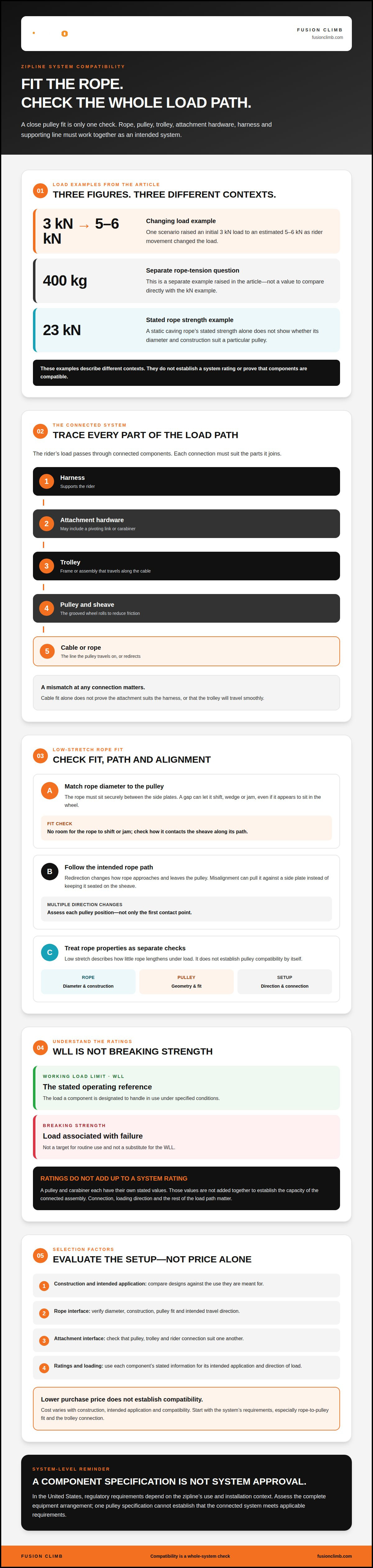
Consider the full path: harness, attachment hardware, trolley, pulley, then cable. A mismatch at any connection can affect how the assembly moves or carries load. A pulley’s fit on the cable alone doesn’t establish that its attachment point suits the harness connection. Nor does the harness alone determine whether the trolley can travel smoothly.
Pulley Safety Standards and Regulations
In the United States, regulatory requirements depend on the zipline’s use and installation context. A pulley specification alone doesn’t establish compliance. Evaluating one component cannot demonstrate that the connected harness, trolley, cable, and overall system meet the requirements that apply to their use.
Assess the complete equipment arrangement, including how the rider attaches to the trolley. Distinguish a component’s stated performance information from any conclusion about the whole installation. This prevents a pulley description from being mistaken for system approval.
Pulley Cost
Pulley cost varies with factors such as construction, intended application, and compatibility with the cable and attachment arrangement. A lower purchase price doesn’t establish that a pulley fits a particular system.
For a low-stretch rope setup, prioritize the rope-to-pulley fit and the connection to the trolley. Compare specifications relevant to those interfaces, rather than treating price as evidence of performance. Start with the system’s requirements, not the cost alone.
Working Load Limits and Breaking Strength
A working load limit is the load a component is designated to handle in use; breaking strength describes the load associated with failure. These are different measures, and neither substitutes for the other.
For example, a rider’s movement can create changing loads: one scenario raised an initial 3 kN load to an estimated 5-6 kN. A separate question raised 400 kg of rope tension. These examples show why static values alone may not represent changing forces. Evaluate the pulley, its connection, and the rest of the load path together, using the component’s stated ratings and intended application.
Low-stretch redirection rope and pulley compatibility
To install a pulley on low-stretch rope, use one designed for that rope type and diameter, then place it in the intended system configuration. During use, the rope must travel through the pulley without catching or binding. A zipline pulley for low-stretch ropes must suit both the rope and its intended direction of travel.
Fit is the first compatibility check. The pulley must be sized to the rope so there’s no gap between its side plates where the rope could jam. A rope that seems to sit in the wheel may still be a poor match if the side plates leave room for it to shift or wedge. Check how the rope contacts the sheave along its path.
Low stretch describes how little the rope lengthens under load; it doesn’t establish pulley compatibility by itself. Diameter, rope construction, pulley geometry, and the intended redirection arrangement all matter. For example, a static caving rope rated at 23 kN has a stated strength, but that figure alone doesn’t show whether its diameter and construction suit a particular pulley. A Zipline pulley for low stretch ropes must still match those physical details.
Redirection changes how the rope approaches and leaves the pulley. Misalignment can pull the rope against a side plate instead of keeping it seated on the sheave. In a system with several direction changes, assess each pulley position, not just the first contact point. Smooth movement depends on maintaining the intended rope path through the assembly.
Use the pulley only within its designed application, with its connection and rope path arranged as intended. A pulley that fits the rope still needs to work with surrounding hardware and system loads. Treat rope strength, pulley fit, and system suitability as separate considerations. For a compatibility review, map the rope diameter and path alongside the pulley’s fit and attachment geometry. This helps guide selection of zipline pulley equipment for a low-stretch rope setup.
What is the working load limit and breaking strength of zipline pulleys?
A working load limit (WLL) and breaking strength describe different performance measures. WLL is the stated operating limit under specified conditions; breaking strength describes the load associated with component failure. Neither figure describes every possible setup. If a pulley connects through a carabiner, each component’s rating applies to that component, not automatically to the complete assembly.
Load travels through a connected path, from the rider attachment to the harness, hardware, pulley, and supporting line. A rating for one part cannot establish the capacity of the next. For example, a pulley and carabiner may each have their own stated values, but those values aren’t added together to create a system rating. Their connection and loading direction matter.
Choosing a zipline pulley for low-stretch ropes means considering its load information alongside the rope’s intended path and the connected equipment. Consider whether the pulley is loaded as designed and whether the attachment pulls in the intended direction. A side pull or altered connection can change how forces act on the component, even when its printed rating appears adequate.
Use the stated WLL as the operating reference, not breaking strength. Breaking strength is not a target for routine use. A moving rider can also create changing forces, so a static value alone may not describe the full loading pattern. Keep the distinction clear when comparing equipment, and don’t transfer one component’s rating to another.
A zipline pulley for low-stretch ropes is compatible only when its intended application, load information, rope path, and attachments align. Assess the complete connected arrangement, not the pulley in isolation. Its rating helps evaluate one part of that arrangement, while the other components and their connections require their own assessment. This avoids mistaking an isolated figure for evidence about the whole system.
How much do zipline pulleys for low-stretch ropes cost?
The purchase price depends on the pulley’s design and intended application. A single pulley and a tandem assembly, for example, are different configurations, so compare prices only after identifying the system each unit is designed to serve. Rope compatibility matters too: a low-stretch rope setup needs a pulley sized to its rope and arrangement.
Compare specifications that affect fit and function before comparing prices. Rope diameter, sheave design, side-plate clearance, and attachment geometry all influence whether a pulley suits a particular setup. A unit that costs less but cannot accommodate the rope or connection arrangement isn’t a useful match. Price alone doesn’t establish compatibility.
Build the comparison around the equipment required for the complete system. Include the pulley and its connection hardware, then account for the harness and any other components being selected. For example, comparing two pulleys makes more sense when both are intended for the same rope diameter and attachment method. This prevents differences in configuration from being mistaken for differences in value.
Use this short comparison checklist:
- Match the pulley’s intended use to the zipline application.
- Compare rope fit, including diameter and side-plate clearance.
- Review the attachment arrangement and stated load information.
- Compare equivalent configurations, rather than unrelated pulley types.
These checks explain why two pulleys may have different prices without suggesting that the higher-priced option automatically fits better. The right choice is the one whose stated design, rope fit, connections, and intended use align with the system. A price comparison is meaningful only after those requirements are clear.
Review pulley specifications alongside your rope and connection requirements before comparing options.
Fusion Climb: Zipline Pulleys
Fusion Climb offers zipline pulleys for customers selecting equipment for a zipline system. Its full body harnesses, Superman style harnesses, lanyards, and tethers also support the rider’s equipment and connection setup.
Consider these product categories when aligning pulley choice with the rope, harness, and attachment arrangement. Use the compatibility points in this guide to identify the specifications that matter, then assess how the pulley and connected equipment fit your system. A product category alone doesn’t establish compatibility; rope fit, connections, and intended use remain central to selection.
For help exploring Fusion Climb’s zipline equipment, contact Fusion Climb.
Move Forward With a Compatible Setup
Make the next step a clear equipment decision. Before settling on a configuration, consider the rope and intended use alongside the pulley and rider connection. This keeps the focus on how the parts fit together, rather than on one specification in isolation.
Fusion Climb offers zipline pulleys, full body harnesses, and Superman style harnesses for zipline equipment selection. When considering a zipline pulley for low-stretch ropes, describe the rope and connection arrangement you’re working with. Those details help focus the discussion on compatibility without treating a product category as proof of a complete system match.
Use the information you’ve gathered to take a deliberate next step. Contact Fusion Climb about pulley compatibility and continue planning your setup with care. A well-considered equipment choice is a solid foundation for the adventure ahead.
Frequently Asked Questions
What pulley types are suitable for zip lines using low-stretch ropes?
A suitable pulley must match the rope and the way the system carries its load. A zipline pulley uses a grooved sheave that rolls along the line, while its trolley supports the assembly. Single and tandem designs differ in how they guide travel; the choice depends on the intended configuration, rope fit, and attachment arrangement, not the pulley label alone.
Which zipline pulleys are compatible with static or low-stretch rope diameters?
Compatibility depends on the rope’s actual diameter and the pulley’s rope channel and side plates. A rope that is too small for the pulley may shift; a poor fit can also leave room for jamming. For example, a static rope’s strength rating doesn’t tell you its diameter or establish which pulley fits. Assess those details together for the specific rope.
How do I choose a zipline pulley based on rope diameter and load rating?
Start by matching the pulley to the rope diameter, then compare the pulley’s stated load information with the intended setup. Keep its rating distinct from those of the harness, carabiner, and other connected parts. A compatible rope fit, for example, doesn’t establish that the pulley’s attachment point suits the rest of the assembly.
What are the best zipline pulleys for low-stretch ropes, and how do they compare?
No single pulley type is best for every low-stretch rope system. Compare sheave and trolley design, rope fit, attachment geometry, and rating information for the intended arrangement. A tandem, double-pulley design and a single pulley are different options, but their suitability depends on the full configuration. Choose equipment to match the system’s requirements, not by type alone.
What rope and pulley setup is recommended for a safe backyard zipline?
There isn’t one universal backyard setup; the rope, pulley, rider attachment, line angle, and stopping arrangement all affect the design. A gravity-propelled line needs a fairly steep slope, and larger ziplines need a way to stop riders or cargo safely at the lower end. A pulley and rope alone don’t make a complete system.
What are the risks of using a pulley with low-stretch rope, including heat and wear?
A poor rope-to-pulley fit can let the rope shift or jam against the side plates. Friction and repeated movement can also contribute to wear, while heat can develop where surfaces rub. During inspection, look for changes in the rope’s surface, the pulley’s sheave, or its movement. Don’t treat a rope’s strength rating as evidence that friction or wear is controlled.